When we’re kids, we often dream about growing up to become a marine biologist, out on boats every day studying the mysterious ocean world. Unfortunately, this dream tends to get lost with age. Not because there’s a lack of interest, but because the pathway is often unclear. Through NOAA funding under the Climate Resilience Regional Challenge (CRRC) grant, the Coral World Ocean & Reef Initiative (CWORI) on St. Thomas, U.S. Virgin Islands, is working to keep that dream alive.Led by CWORI Community Engagement and Wildlife Manager Kelsey Worth, CWORI has started an apprenticeshipprogramgeared towards local Virgin Islanders to help show them what a career in marine science can look like.
Born and raised on St. Thomas, Nakyla King was the first recipient of the program. Currently studying marine science at the University of South Florida, Nakyla returned home for three months over the summer to work with CWORI. The apprenticeship centered on CWORI’s coral restoration projects, but Nakyla also gained experience in wildlife rehabilitation, public outreach, and leadership. This range of experiences is invaluable for early-career scientists, allowing them to explore different areas of work and discover where their interests lie.
One of the highlights of Nakyla’s apprenticeship was learning photogrammetry, a technique scientists use to create detailed 3D models of reefs. The process involves swimming in a systematic, lawn-mower-like pattern while capturing thousands of photographs of a specific area, which are then stitched together using specialized software. Recalling her first attempt, Nakyla said, “The first time we went out there was a horrible current, so I’m trying to stay on a straight path, not bump into something, and keep the camera not too low or high.”
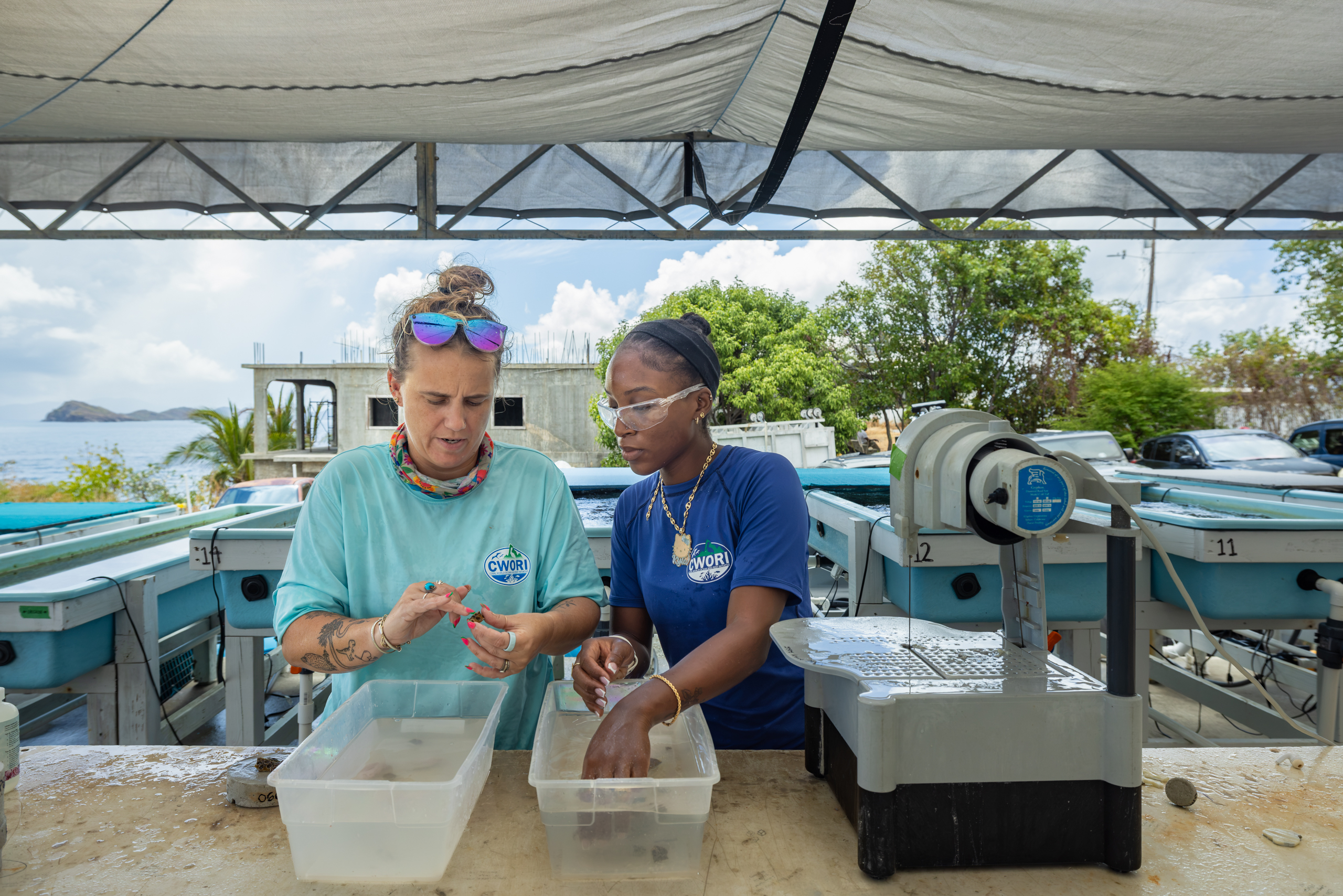
She explained that learning photogrammetry also made her a more confident and capable SCUBA diver. Because the technique requires capturing overlapping images along a consistent path, maintaining precise buoyancy is essential. Beyond photogrammetry, Nakyla became an integral part of CWORI’s coral restoration team, participating in coral propagation, land-based and in-water nursery maintenance, and coral outplanting.
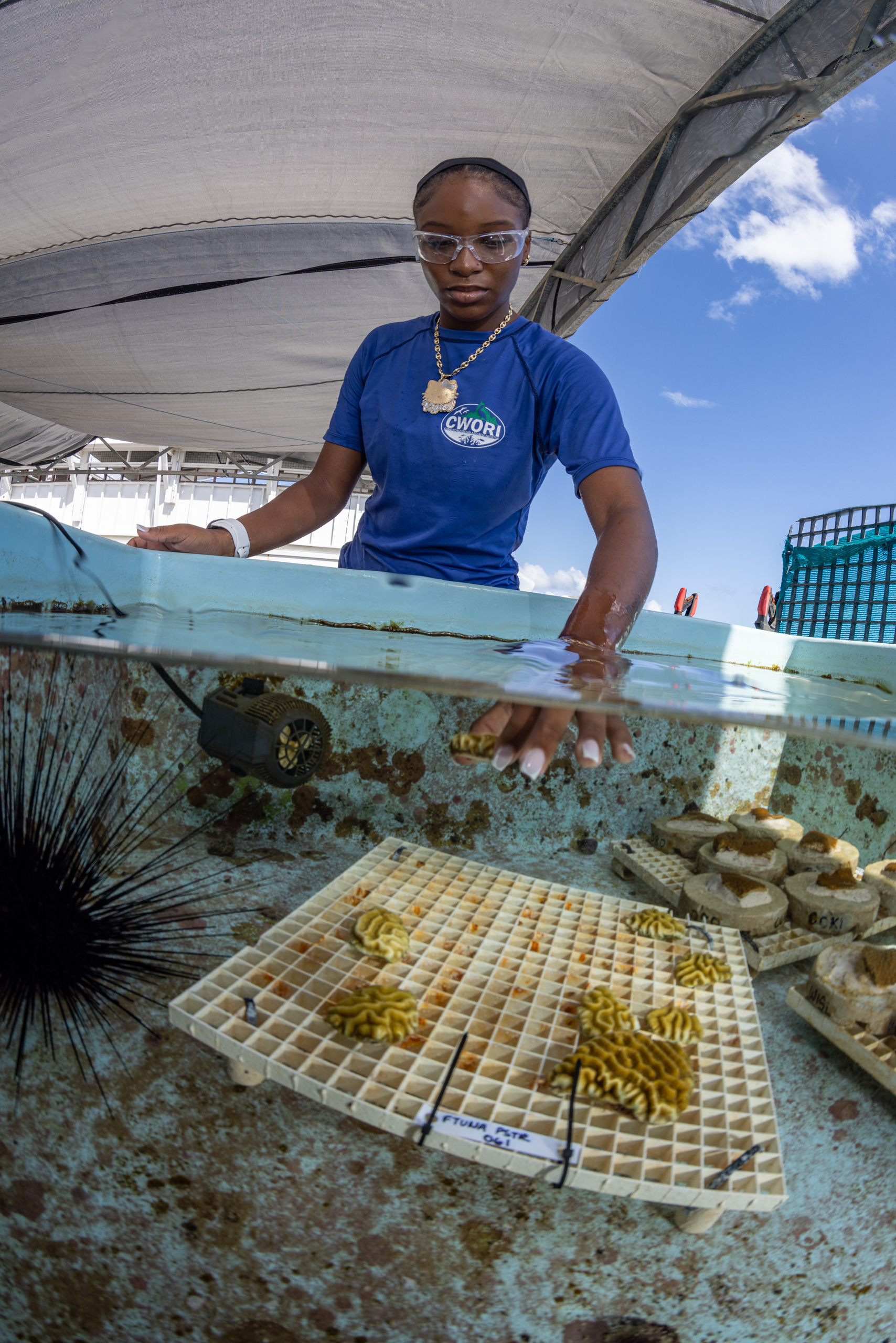
Nakyla selects a symmetrical brain coral (Pseudodiploria strigosa) fragment for propagation. The species has been heavily impacted by coral disease and bleaching. Photo: Dan Mele
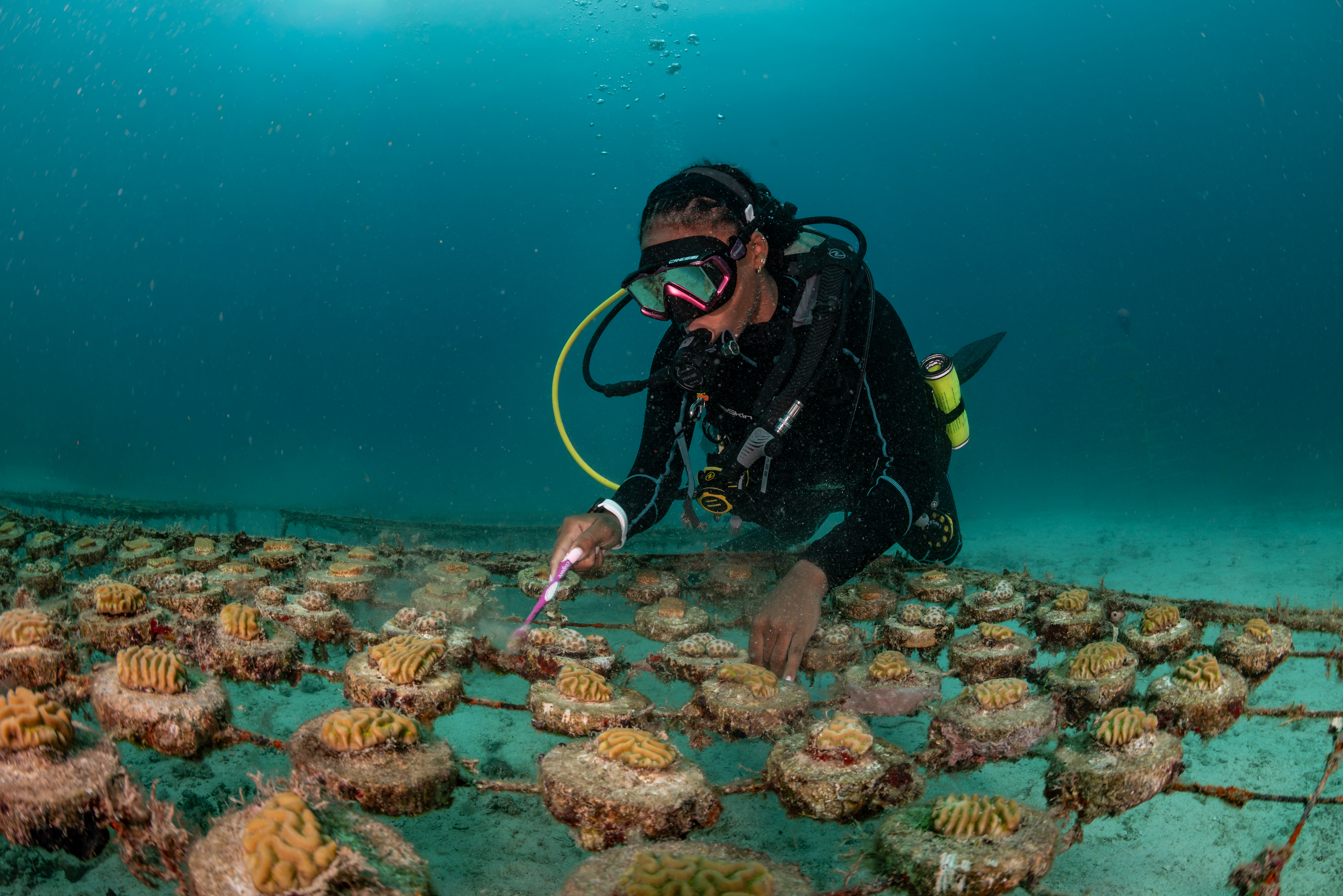
During her internship, Nakyla became a more confident and skilled diver through many hours working in the water at coral nurseries, where maintaining precise buoyancy is essential. Photo: Dan Mele
Another highlight of Nakyla’s apprenticeship was her involvement in education and outreach. Reflecting on her own childhood, she explained, “As a Virgin Islands native, when I was a kid, there weren’t many opportunities to go out and talk to individuals about this field,” referring to the limited opportunities to connect with people working in marine science. Having the chance to fill that gap by talking with children and their parents about marine science at public outreach events was especially rewarding.
But Nakyla’s work at CWORI went beyond education. She was also contributing to active research and coral restoration projects with tangible benefits for the Virgin Islands. Over the past several decades, the health of the territory’s coral reefs has declined significantly. Rising ocean temperatures, which cause coral bleaching, land-based pollution, and coral diseases have all contributed to this decline. In response, organizations like CWORI have established coral restoration programs to help rebuild these threatened ecosystems.
CWORI uses both land-based and in-water nurseries to propagate corals, including several endangered species, with the goal of restoring reefs throughout the territory. These efforts help protect ecosystems that have existed in the Virgin Islands for thousands of years and have long been integral to the region’s communities and cultures, from its earliest Indigenous inhabitants to the people who call the islands home today.
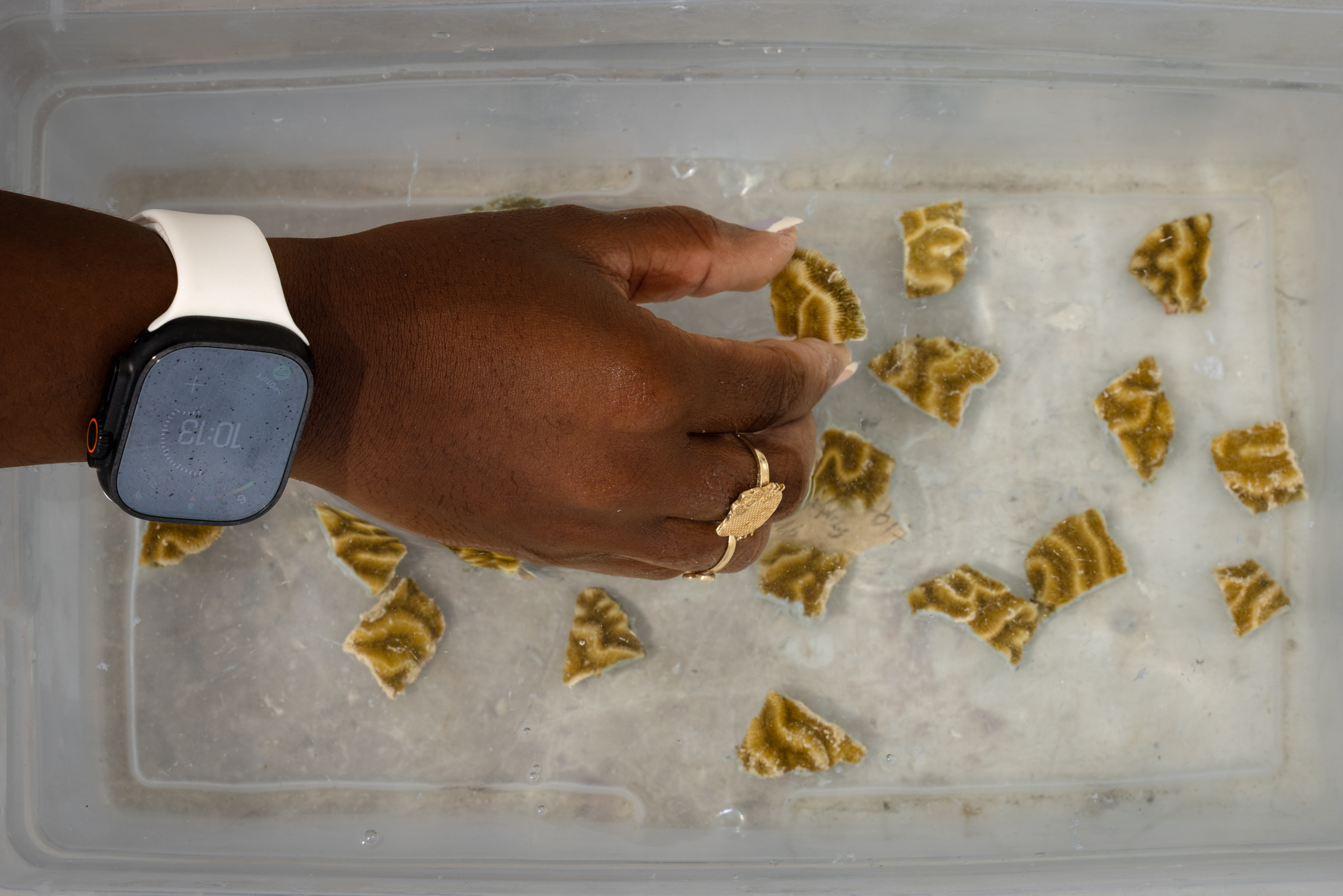
Fragmenting larger corals into smaller pieces can help increase growth rates in many slower-growing coral species. Photo: Dan Mele
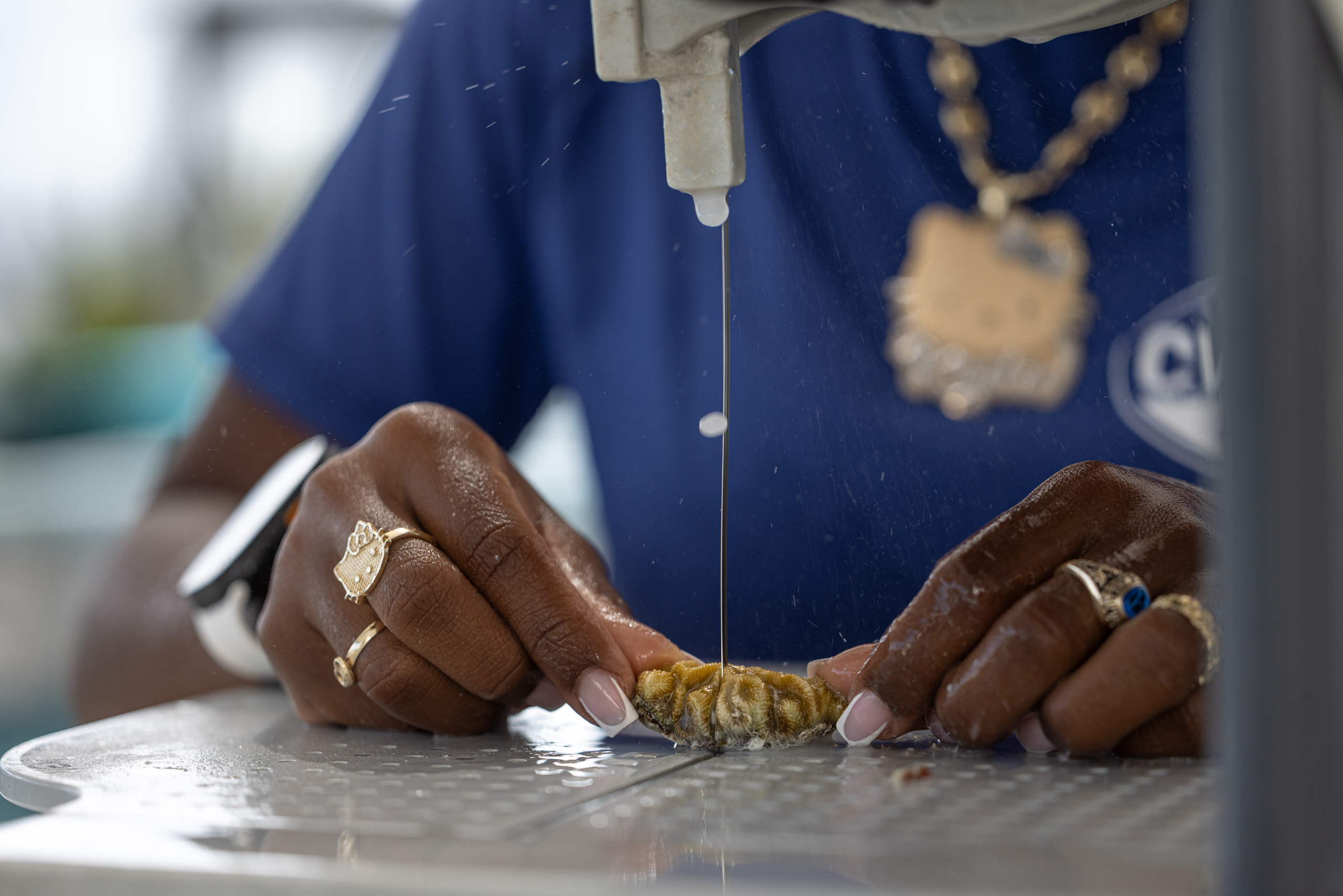
In addition to learning coral restoration techniques, Nakyla gained hands-on experience with specialized tools, including a wet band saw used to cut corals into smaller fragments. Photo: Dan Mele
The Virgin Islands’ coral reefs are also a major attraction for tourists. To visitors, the reefs may appear vibrant and healthy, but Nakyla offers a different perspective. Having grown up on St. Thomas, she has seen how much they have changed over time. “When you’ve been here all your life, you know that this is the bare minimum,” she said, reflecting on the condition of today’s reefs compared to those she remembers from childhood. She added, “It’s my passion and my need to make it better.”
Opportunities like CWORI’s apprenticeship program are helping turn that passion into action. But the exchange of knowledge goes both ways. When Kelsey established the program, she wanted to foster a mentor-mentee relationship in which both parties could learn from one another. Looking back on Nakyla’s apprenticeship, Kelsey said she felt she had learned just as much from Nakyla as Nakyla had learned from her and the CWORI team.
Kelsey emphasized the importance of this exchange, particularly because not everyone working at CWORI was born in the Virgin Islands. Developing and retaining local talent not only creates career pathways for Virgin Islanders interested in marine science, but also ensures that local knowledge and perspectives are shared with those who come to the territory to help protect its coral reefs. By investing in the next generation of local scientists, programs like CWORI’s apprenticeship help build a stronger future for both science and conservation in the Virgin Islands.
CWORI Community Engagement and Wildlife Manager Kelsey Worth (left) works alongside Nakyla King (right) to propagate corals for future outplanting at Coki Reef. Photo: Dan Mele